
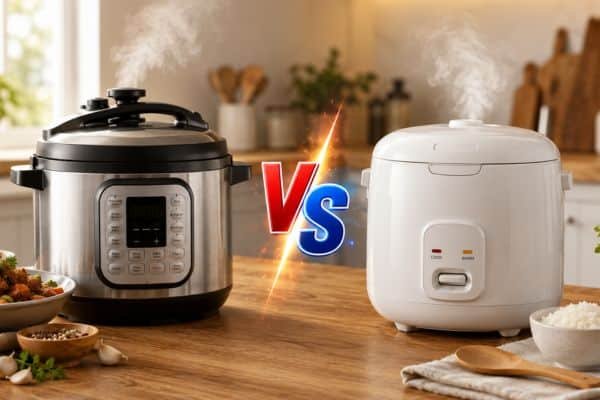
Choosing between a rice cooker vs pressure cooker can feel confusing at first. Both appliances save time and make cooking easier, but they work very differently. One focuses on simple rice cooking. The other handles fast meals, soups, beans, meat, and more.
Many people also compare a slow cooker vs rice cooker because these appliances often look similar on the counter. Still, each one serves a different purpose in the kitchen.
This guide breaks everything down in simple words so you can decide which option fits your cooking style, budget, and daily routine.
What Is A Rice Cooker?
A rice cooker is a kitchen appliance made mainly for cooking rice. It heats water until the rice becomes soft and fluffy. Once the rice finishes cooking, the machine switches to warm mode automatically.
Most rice cookers are very easy to use. Add rice, add water, press a button, and wait.
Many modern models can also steam vegetables, cook oatmeal, quinoa, and even make soups. Still, rice remains the main focus.
People who eat rice daily often love how reliable these machines are.
What Is A Pressure Cooker?
A pressure cooker cooks food using sealed steam pressure. The trapped steam creates high heat inside the pot, which speeds up cooking time.
Modern electric pressure cookers have become very popular because they can cook many foods quickly. They work well for:
- Meat
- Beans
- Rice
- Soup
- Chili
- Pasta
- Stews
Some people ask, “is a rice cooker a pressure cooker?” The answer is no. A pressure cooker uses pressure cooking technology, while a rice cooker mainly uses normal heat and steam.
Pressure cookers are more versatile overall.
Rice Cooker Vs Pressure Cooker: Main Differences
Cooking Method
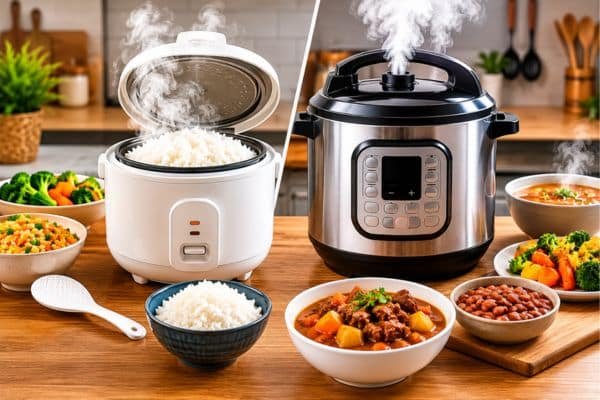
A rice cooker cooks slowly using steady heat and steam. It is designed to make rice texture soft and even.
A pressure cooker traps steam pressure inside the pot. This raises the temperature and cooks food much faster.
That is the biggest difference between these appliances.
Cooking Speed
Pressure cookers are much faster.
Beans that normally take hours can cook in under an hour. Tough meat becomes tender quickly.
Rice cookers take more time because they use gentler cooking.
If speed matters most, the pressure cooker usually wins.
Ease Of Use
Rice cookers are easier for beginners.
Most models only have one or two buttons. There is almost no learning curve.
Pressure cookers need a little practice. Users must learn pressure release methods, timers, and settings.
Still, modern electric pressure cookers are far easier than older stovetop models.
Food Variety
Rice cookers mainly focus on rice and steaming.
Pressure cookers can replace several kitchen appliances because they cook many different meals.
People who enjoy experimenting in the kitchen usually prefer pressure cookers.
Cleaning
Rice cookers are simple to clean. Most only have a removable inner pot and lid.
Pressure cookers have sealing rings, valves, lids, and more accessories that require extra cleaning.
Busy people sometimes prefer the simplicity of rice cookers for this reason.
Price
Basic rice cookers are usually cheaper.
Many good models cost under $50.
Pressure cookers often cost more because they include advanced cooking features and safety systems.
Premium models can become expensive quickly.
Size And Storage
Rice cookers are compact and fit easily in small kitchens.
Pressure cookers are bulkier because they need thicker walls and larger lids.
People with limited counter space may prefer a rice cooker.
Rice Cooker Vs Pressure Cooker Comparison Table
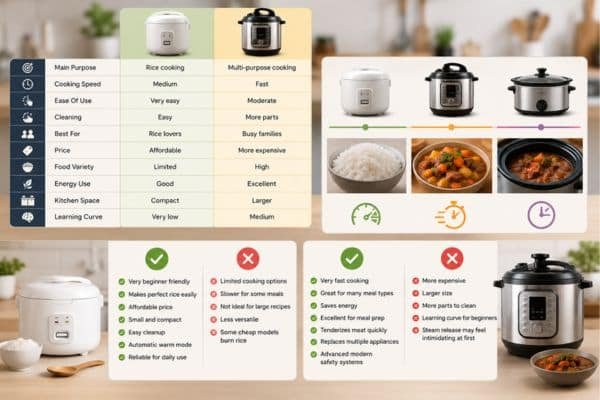
| Feature | Rice Cooker | Pressure Cooker |
| Main Purpose | Rice cooking | Multi-purpose cooking |
| Cooking Speed | Medium | Fast |
| Ease Of Use | Very easy | Moderate |
| Cleaning | Easy | More parts |
| Best For | Rice lovers | Busy families |
| Price | Affordable | More expensive |
| Food Variety | Limited | High |
| Energy Use | Good | Excellent |
| Kitchen Space | Compact | Larger |
| Learning Curve | Very low | Medium |
Rice Cooker Vs Slow Cooker: Are They Similar?
Many buyers also search for rice cooker vs slow cooker comparisons.
A slow cooker uses low heat over several hours. It is great for stews, soups, and tender meat.
A rice cooker cooks much faster and focuses mainly on rice.
Some people also ask, “is a rice cooker the same as a crock pot?” No, it is not.
A Crock-Pot is simply a brand of slow cooker.
The difference between a rice cooker and a slow cooker mostly comes down to cooking speed and meal type.
Pros And Cons Of A Rice Cooker
Pros
- Very beginner friendly
- Makes perfect rice easily
- Affordable price
- Small and compact
- Easy cleanup
- Automatic warm mode
- Reliable for daily use
Cons
- Limited cooking options
- Slower for some meals
- Not ideal for large recipes
- Less versatile
- Some cheap models burn rice
Pros And Cons Of A Pressure Cooker
Pros
- Very fast cooking
- Great for many meal types
- Saves energy
- Excellent for meal prep
- Tenderizes meat quickly
- Replaces multiple appliances
- Advanced modern safety systems
Cons
- More expensive
- Larger size
- More parts to clean
- Learning curve for beginners
- Steam release may feel intimidating at first
Which One Is Better For Beginners?
Beginners usually feel more comfortable using a rice cooker.
It is almost impossible to mess up basic rice recipes. Add water and rice, then press start.
Pressure cookers require more learning. Cooking times and pressure release methods matter more.
Still, many beginners learn pressure cooking quickly after a few uses.
Which One Is Better For Families?
Families often prefer pressure cookers because they save time.
Busy parents can cook soup, meat, rice, and vegetables much faster in one appliance.
Large meal capacity also helps during family dinners.
Rice cookers are still useful for homes where rice is served almost every day.
Which One Is Better For Small Kitchens?
Rice cookers usually fit small kitchens better.
They are compact and lightweight.
Pressure cookers take more space, although they may replace several other appliances.
The better option depends on how much kitchen storage you have available.
Which Appliance Saves More Energy?
Pressure cookers often use less energy overall because they cook food faster.
The shorter cooking time helps reduce electricity use.
Rice cookers are still energy efficient, especially for simple rice cooking.
Both appliances are usually cheaper to run than using a large oven.
Common Problems Users Mention
Rice cooker users often mention:
- Rice sticking to the bottom
- Uneven cooking in cheap models
- Limited cooking features
- Small cooking capacity
Pressure cooker users commonly mention:
- Too many settings
- Steam release fear
- Rubber seal smell
- Large countertop size
Despite these complaints, both appliances remain very popular because they save time and simplify cooking.
Which One Gives Better Value?
A rice cooker gives excellent value for people who mainly want perfect rice every day.
A pressure cooker gives better overall value for people who cook many different foods regularly.
Many households eventually buy both because they serve different purposes.
If you already struggle with hard or undercooked rice, this helpful guide explains easy fixes naturally: How To Fix Cooked Rice That Is Hard
Final Verdict
The rice cooker vs pressure cooker decision depends on what matters most in your kitchen.
Choose a rice cooker if:
- You mainly cook rice
- You want simplicity
- You prefer easy cleanup
- You have limited kitchen space
Choose a pressure cooker if:
- You want versatility
- You cook large meals
- You need faster cooking
- You want one appliance for many recipes
There is no wrong choice here. Both appliances make cooking easier and save valuable time. The best option simply depends on your lifestyle and favorite meals.